Why did Jesus Christ had to suffer, be tormented and die in the cross ?

Updated: Dec 1, 2024
There are three hypotheses: the first theory appeared historically in the first century AD and was developed by agnostics who separate matter (body) from spirit and argued that since Christ (as all humans) was composed of matter and spirit, being in constant fight to release the spirit from the weaknesses of matter. Thus, the world/humanity is in a constant struggle between spirit and matter and the spirit must be freed from matter and its limitations. We find similar theories in Greek philosophers. According to this theory, the Messiah must be someone who manages to free the spirit from matter, in the case of Christ to overcome death and be resurrected. This theory creates a concept about the world where matter is not something compatible with God and must be eliminated. But this theory was refuted, especially after the Council of Nicaea in 400 where it was decided that the creation of the world by God was also material and therefore was aimed at connecting matter with spirit. In the same way, the Council rejected the “humanistic” approach, that the entry of the Holy Spirit into the human Messiah was trying to overcome over body and matter. Despite the fact that such theories were refuted, supporters of similar concepts, still exist today.
The second theory, which is mainly supported by Protestantism, is the theory of the administration of justice by God. According to this theory there is on the one hand God and on the other the sin/evil which causes His wrath and what can eliminate God’s wrath and bring “justice” is a sacrifice of blood, as sacrifices in the past, in the Old Testament, accomplished. The Holy Temple in the past had turned into a huge slaughterhouse where blood was constantly flowing from the sacrifices. People then believed that this would bring about a balance between sin/evil and God. This theory wants God to demand justice and punishment, ending with the sacrifice of the Son as the one who will eventually overcome all other sucrrifies and bring eternal justice and balance. According to this theory, there can be no balance, no forgiveness without sacrifice. Similar acts are found historically in other cultures, such as the Mesopotamians and the Greeks, as for instance in the example of the sacrifice of Iphigenia that was required to appease the gods. The evolution of this theory today, sees God as a great judge who demands sacrifices or punishment of mankind. This is a very “old fashioned religious” approach of God that misses the main point of Jesus’ sacrifice, which was the ultimate expression of love. It is more appropriate to think that the party who actually needed the sacrifices, was not God, but man to calm/clean his consciousness in relation to the Creator. According to this view, in fact God is imprisoned in his own justice and cannot be freed from the demand for justice unless through some ransom. In this way, the divine justice and the justice of the universe becomes the more prominent and central element and the infinite love of God, less.
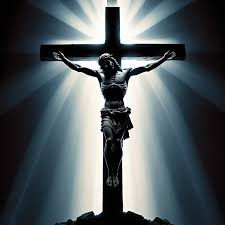
The third theory claims that Christ had to be humanized and sacrificed, in order to achieve the exact opposite than the humanists believe, NOT to release the spirit from the prison of the body, but to raise the matter to a Godly/spiritual level. To transform the body into a spiritual tool. Christ had to clothe God’s spirit in a human body. The sacrifice of Christ took place not only as a proof of God’s absolute love but also to highlight the value of the body as a spiritual element and necessary in the relationship between God and man.
This is the central concept in Orthodox Christianity and seems to relate more to God's love plan and the purpose of creation. God cannot be "imprisoned" in His own justice and does not need blood sacrifices. It's all out of love and with an understanding of the human conscience, that could not have been freed in any other way.


Comments